
Everything foreign investors, property buyers, and developers need to know before investing in Bali.
Bali continues to attract foreign investors, retirees, and entrepreneurs looking to purchase land or develop villas, resorts, and commercial properties. However, one of the most overlooked aspects of property investment is zoning regulations.
A plot of land may offer breathtaking views or a prime location, but if its zoning designation does not permit your intended use, your investment could face legal obstacles, permit refusals, or significant financial losses.
Understanding Bali’s zoning system before purchasing or leasing land is essential. This guide explains the differences between Green Zone, Yellow Zone, and Pink Zone, and why legal due diligence should always be part of your investment process.
What Are Bali Zoning Regulations?
Zoning regulations determine how land may legally be used within a specific area. They are established under Indonesia’s regional spatial planning framework (RTRW and RDTR) and are enforced by local governments.
The zoning designation of a property affects:
- Whether residential or commercial buildings are permitted
- The types of businesses that may operate
- Building height and density restrictions
- Environmental protection requirements
- Future development potential
- Eligibility for construction permits
Before investing, buyers should always verify the property’s zoning status through official government records.
Green Zone (Zona Hijau)
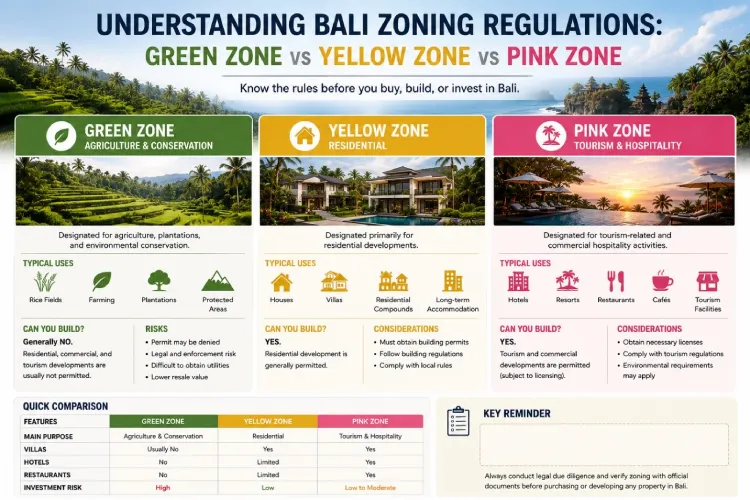
The Green Zone is designated primarily for agriculture, environmental conservation, and the protection of Bali’s natural landscape.
Typical uses include:
- Rice fields
- Agricultural land
- Plantations
- Protected green areas
Can You Build on Green Zone Land?
In most cases, no.
Residential villas, hotels, restaurants, and commercial developments are generally not permitted within Green Zone areas unless specific legal exceptions apply.
Although some properties in Green Zones appear developed, investors should not assume that existing buildings comply with current regulations.
Risks of Purchasing Green Zone Land
- Building permits may not be issued.
- Commercial operations may not be legally permitted.
- Financing and insurance may become difficult.
- Property value may be negatively affected.
- Future enforcement actions could impact unauthorized developments.
The lower purchase price of Green Zone land often reflects these legal and regulatory risks.
Yellow Zone (Residential Zone)
The Yellow Zone is intended primarily for residential development.
Properties within this zone are generally suitable for:
- Private residences
- Villas
- Residential compounds
- Long-term accommodation
For many foreign buyers, Yellow Zone land provides greater legal certainty for residential investments.
However, zoning approval alone does not eliminate the need to obtain the required construction permits and comply with local building regulations.
Pink Zone (Tourism Zone)
The Pink Zone is allocated for tourism-related developments and commercial hospitality businesses.
Typical permitted uses include:
- Hotels
- Resorts
- Boutique accommodations
- Restaurants
- Cafés
- Tourism facilities
- Commercial villas (subject to licensing requirements)
Investors planning hospitality or short-term rental businesses often prefer properties located within Pink Zones.
Nevertheless, tourism zoning does not automatically authorize commercial operations. Businesses must still obtain the necessary licenses and comply with applicable Indonesian laws and regulations.
Comparison of Bali’s Main Zoning Categories
| Zone | Primary Purpose | Villas | Hotels | Restaurants | Investment Risk |
|---|---|---|---|---|---|
| Green Zone | Agriculture & Conservation | Usually No | No | No | High |
| Yellow Zone | Residential | Yes | Limited | Limited | Low |
| Pink Zone | Tourism & Hospitality | Yes | Yes | Yes | Low to Moderate |
Common Misconceptions About Bali Zoning
“Everyone builds in Green Zones.”
The existence of buildings in Green Zone areas does not necessarily mean they were legally constructed or would be approved under current regulations.
Investors should never rely on neighboring developments as proof that future construction will be permitted.
“The seller says the land is safe.”
Property sellers and brokers may provide information based on their understanding, but buyers should always obtain independent legal verification before signing any agreement.
Professional legal due diligence provides significantly greater protection than verbal assurances.
“I can simply change the zoning.”
Changing a property’s zoning classification is a complex governmental process and cannot be guaranteed.
Investment decisions should always be based on the property’s current legal zoning status—not on assumptions about future changes.
Why Legal Due Diligence Matters
Before purchasing or leasing land in Bali, investors should conduct comprehensive legal due diligence to verify:
- Land ownership
- Certificate authenticity
- Current zoning classification
- Existing encumbrances
- Building permit status
- Road access rights
- Land boundaries
- Ongoing legal disputes
- Compliance with regional spatial planning regulations
A thorough legal review helps identify potential risks before significant financial commitments are made.
Practical Tips for Foreign Investors
Before signing any agreement:
- Verify the zoning classification through official records.
- Confirm the land certificate with the relevant authorities.
- Review all permits and licenses associated with the property.
- Conduct legal due diligence with an experienced property lawyer.
- Ensure the intended use of the property complies with applicable zoning regulations.
Taking these steps can significantly reduce legal and financial risks.
Conclusion
Bali’s zoning regulations play a crucial role in determining whether land can legally be used for residential, commercial, or tourism purposes. While Green Zone properties may appear attractive due to their lower prices and scenic locations, they often involve substantial legal restrictions.
Yellow Zone and Pink Zone properties generally offer greater certainty for residential and tourism-related developments, provided all required permits and licenses are properly obtained.
Before purchasing property in Bali, investors should always verify the zoning classification and conduct comprehensive legal due diligence to protect their investment and ensure compliance with Indonesian law.
Need Legal Assistance?
At Dewata Law Firm, we assist foreign investors, developers, and property buyers with:
- Property Legal Due Diligence
- Zoning Verification
- Land Certificate Review
- Property Acquisition Support
- PT PMA Establishment
- Contract Drafting and Review
- Investment Legal Advisory
Whether you are purchasing land, establishing a business, or developing a hospitality project in Bali, obtaining professional legal advice before signing any agreement can help protect your investment and avoid costly legal issues.